

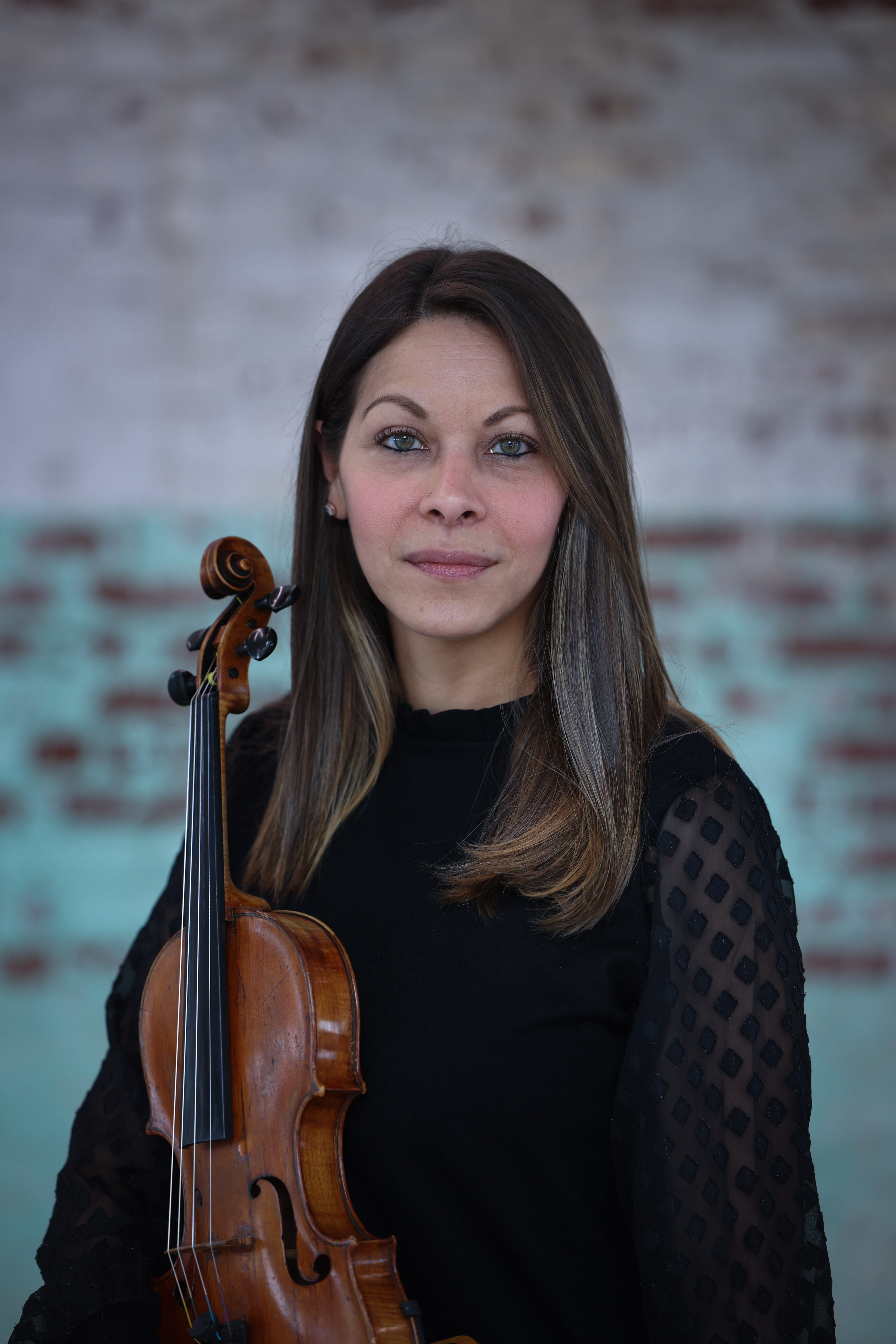
“There’s something I try to pass along to my students now. Yes, work on your pieces and be great at your instrument. But also ask, “What’s my vision? What am I going to do with this when I graduate?”’
1. You’ve done a lot of chamber music over the years. How did that become such an important part of your musical life?
In undergrad, I did a lot of chamber music and absolutely loved it. I stepped away from it a bit during my master’s, but once I got to Memphis, I found my way back- both through traditional chamber groups and through recording sessions that are basically small ensembles, like string quartets or small string sections. It’s still classical, but it felt like a different world to me, helped by teachers who really loved teaching chamber music.
2. What was it like competing at major chamber music competitions?
We were very serious about it. I played a lot of piano trios (violin, cello, and piano) and we rehearsed constantly and traveled to competitions. We went to events like Fischoff in Indiana (we went twice), plus others like Coleman and Plowman.
You submit a recording first; if you’re accepted, you play multiple rounds over several days, often in big halls with an audience even in the prelims. It’s very competitive but also exciting. The top prizes can be thousands of dollars, plus concert opportunities and career support. Those competitions really exist to help launch chamber music careers.
3. When you moved to Memphis, what were some of the biggest challenges in building your career?
One of the hardest parts was simply finding my path. I came here thinking I would keep teaching in a straightforward way, but that didn’t work out. I started subbing with the symphony and then slowly building my own private studio on the side.
There are a lot of musicians in town, so finding students isn’t easy. It’s a lot of word of mouth, connections, and showing up in the community. Like when I taught for MMI, and some students and parents started asking for private lessons.
Something I wish school had focused on more is the business side of music: how to market yourself so students (and parents) can actually find you. I’m still figuring out how to present myself, how to grow, and how to make it sustainable.
4. Do you enjoy being your own boss now that you’ve created this independent career?
I really do now. For a long time, I was afraid because I didn’t have experience running my own thing. But once I realized I could be my own boss, I discovered I liked it.
If you have that gut feeling that you can do something, sometimes you just have to throw yourself into it and figure it out as you go. That’s pretty much what I’ve been doing.
5. Tell us about your company, Diamond Strings. What’s your vision for it?
I recently started my own company, Diamond Strings, focusing on booking weddings and events for my chamber music group. It’s new, I only started last year, so it’s still in the early stages, but I have a big vision for it.
I want to see it grow beyond just Memphis, to become a larger, established company in the region. We already have days where we’re booked for multiple events at once, which means I’m coordinating several ensembles while also playing. It’s a lot of moving parts, so I rely heavily on musicians I trust. People who are prepared, responsive, and professional.
6. How are you blending classical training with the music people request for weddings and events?
The way I listen to music has changed. Now, when I hear something, I’m always asking, “How would this sound on strings?”
People still love traditional classical pieces for weddings, but more and more they’re asking for pop. Lady Gaga, Bruno Mars, and so on. There are great arrangers online who adapt these songs for string ensembles, and that’s become a big part of what we do.
For fun, I listen mostly to pop, not classical. Artists like Bruno Mars, Bad Bunny, and newer artists like Alex Warren and Olivia Dean. My kids listen along with me; they enjoy all kinds of music.
7. Looking back, what do you wish you had known in high school about studying music and building a career?
I wish I’d had a clearer picture of what a music career can actually look like. I didn’t really think, early on, about what I would do with my degree once I finished school. My vision didn’t really form until I was already out in the world and had to figure it out in real time.
There’s something I try to pass along to my students now:
Yes, work on your pieces and be great at your instrument.
But also ask, “What’s my vision? What am I going to do with this when I graduate?”
8. What’s your biggest piece of advice for young musicians who want to work professionally?
My main message is simple:
Be early. Not just on time—early.
Be prepared. Know your music, know the details of the job.
Be reliable.
Talent is wonderful, but it only takes you so far. People may not call you back if you’re late or unreliable, no matter how well you play. In my own company, I don’t rehire musicians who can’t show up on time, even if they’re amazing players.
If you show people that you are prepared, dependable, and someone they can trust, they will want to work with you again and again. 𝄂
Getting the Gig exists to surface exactly this kind of detail—so high school musicians (and their parents) can see what real, workable music lives actually look like.