


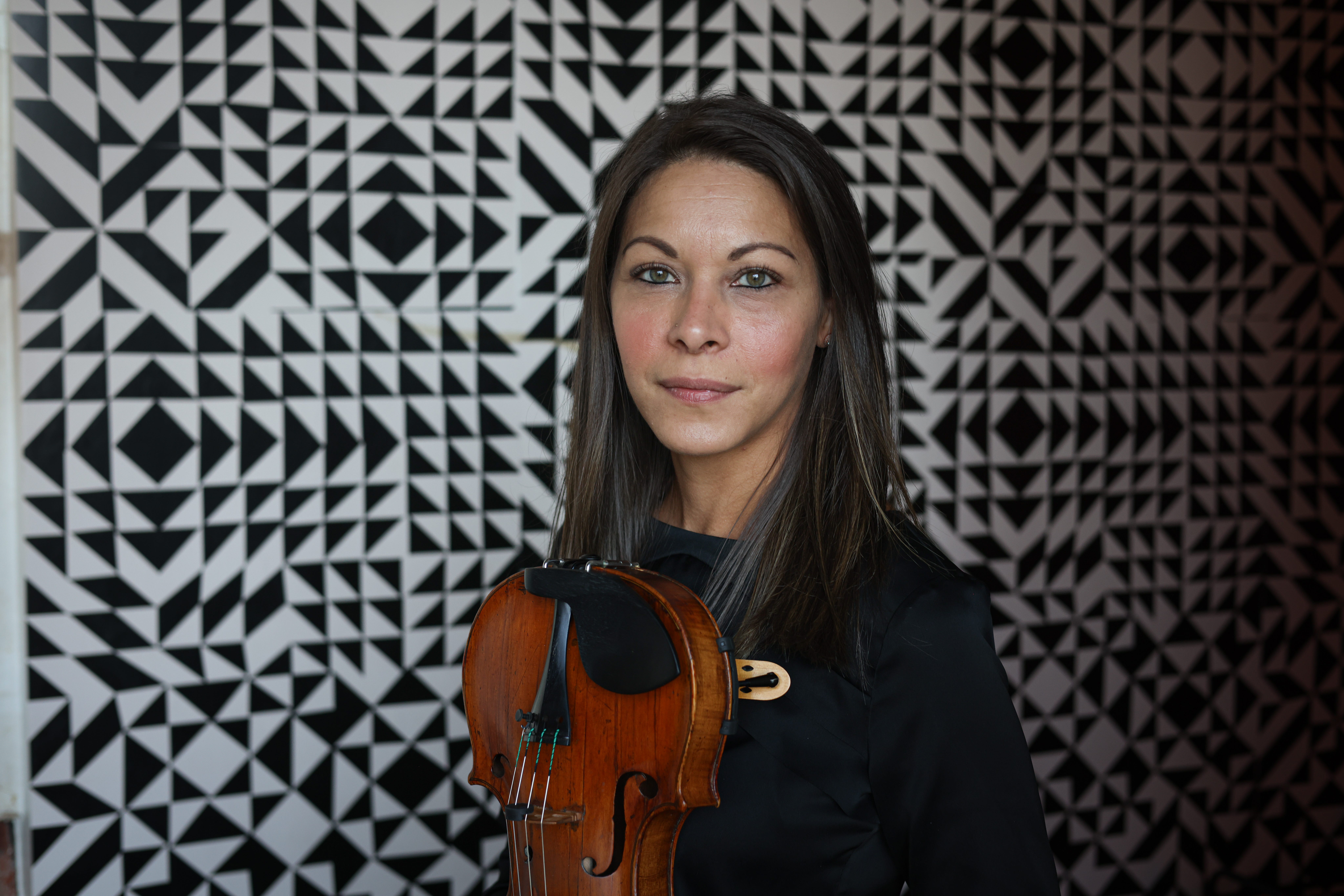
Most kids bring home finger-paintings from kindergarten. Yennifer Correia brought home a violin and a K–12 scholarship. In this installment of Getting the Gig, she walks us through her wild pipeline: conservatory school in Venezuela, summers at Interlochen and Meadowmount, the pressure cooker of Rice, teacher burnout, and finally finding a balance between the symphony stage and the classroom.
1. What’s your main instrument, and how did you get started?
My main instrument is the violin, and I started when I was about six or seven. I was in public kindergarten in Venezuela when a private school with a conservatory came to test kids for musical aptitude. They saw something in me, gave me a violin, and offered a full scholarship from elementary through high school.
2. What was that music school like?
It was a full-day school, basically preschool–12th grade, with regular academics plus a serious music conservatory built in. We had private lessons, orchestra, theory, ear training—the whole thing. The school even provided the instrument, and my family never had to pay for tuition.
3. Did you always stick to violin, or did you try other instruments?
Violin was always my main focus, but the curriculum required us to learn recorder and cuatro, a small Venezuelan four‑string instrument, kind of like a little guitar. In high school I also volunteered to play viola for a couple of concerts when the orchestra needed more violas. But overall, it’s been almost entirely violin.
4. How did your education continue after high school?
The same people who supported me in Venezuela also sponsored my studies in the U.S. I did my undergrad at the University of North Texas in Denton, and then went to Rice University in Houston for my master’s. Rice was a very intense orchestral training environment. That’s also where I met my husband—he was doing his doctoral degree there—and later we both ended up in Memphis, playing with the Memphis Symphony.
5. At what point did you start thinking seriously about your career path?
Honestly, pretty late. In classical music, it often feels like your options are either teaching or performing, and I knew I wanted both. I chose a performance degree, but I didn’t really start preparing orchestra excerpts seriously until my senior year of undergrad. At Rice, everyone around me was laser‑focused on orchestral careers, which pushed me to take that path more seriously.
6. You’ve mentioned burnout. What did that look like, and how did it lead you to teaching?
At Rice I was practicing six to eight hours a day, plus orchestra and chamber music rehearsals. The competition was extremely high, and along with my stage fright, performing became emotionally exhausting. By the time I finished my master’s, I felt pretty defeated and started to wonder if a pure performance career was sustainable for me.
So I went into teaching. I took a full‑time job at an elementary school in Houston, teaching general music and a small violin program. I did that for about two years, and I genuinely enjoyed it.
7. How did you end up balancing performance and teaching in Memphis?
When we moved to Memphis, my plan was to keep teaching. Instead, I began playing with the Memphis Symphony, and that reignited my passion for performing. At the same time, my classroom experience in Houston made me a much stronger educator when I later worked in schools as a fellow. Navigating a classroom isn’t something you really learn in music school, so having done it full-time already made a big difference.
Now I see my ideal path as a combination: I want to play in orchestra and also teach. I don’t want to be limited to just one role. 𝄂
Getting the Gig exists to surface exactly this kind of detail—so high school musicians (and their parents) can see what real, workable music lives actually look like.
Join us next time as we pick back up for Part 2 of Yennifer Correia!