


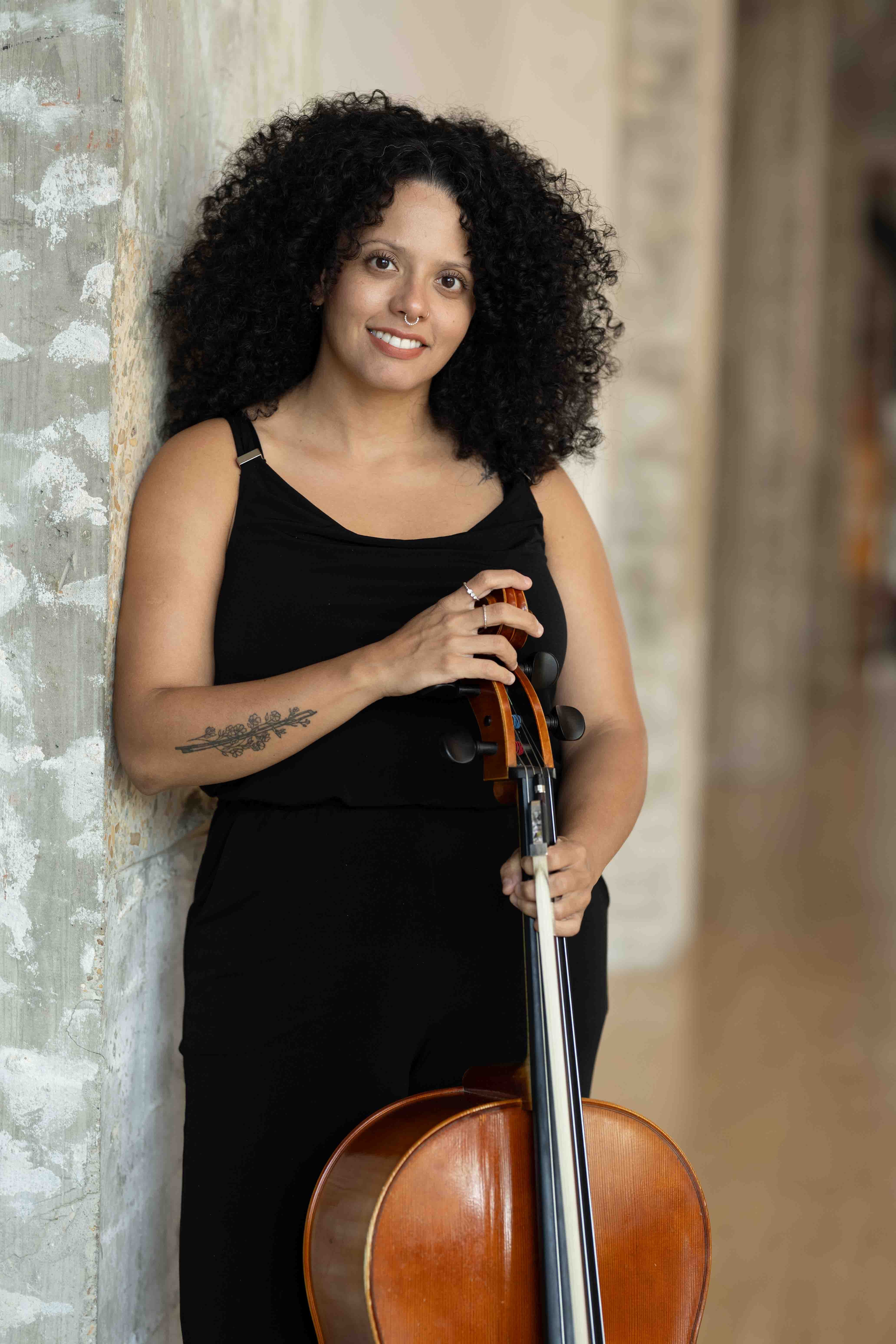
What has your educational journey been like—from Brazil to the U.S.?
In Brazil, I went straight into a music degree after high school. Our undergrad was very focused: music theory, history, harmony, counterpoint, orchestra, and a ton of cello.
Then I did a master’s degree in Brazil, researching Brazilian composers who had been erased or ignored, and working on projects that made their music more accessible.
In 2016, my cello teacher told me about an opportunity in the U.S. for an Artist Diploma in Louisiana. I defended my thesis early, said goodbye to my family, and moved to the U.S. with about $400 in my pocket and basically no English. My teacher there spoke Portuguese, which helped, but it still took months before I felt brave enough to speak.
After that came a second master’s, and now I’m finishing my Doctor of Musical Arts (DMA) in Memphis. Over time I realized a DMA is not just “more cello.” It’s about research, teaching, leadership, and vision—who you want to be in the musical world.
Do you still want to perform, or is teaching your main focus now?
I want both. I love performing, and I want my students to feel proud to say, “That’s my teacher” when they see me on stage or online. But teaching is just as important to me.
Long‑term, one of my biggest dreams is to build a studio that can offer scholarships, so money isn’t the main reason a talented young player can’t continue. I also want to be a bridge between students in Brazil and opportunities abroad, using the connections I’ve made in the U.S.
I’m also interested in community‑engaged projects—like the work I did with Iris Collective and the Baptist Center for Good Grief, helping families who had lost loved ones create music together. Projects like that show me how powerful music can be outside of a concert hall.
What kind of music do you listen to for your own listening pleasure?
Even though I’m a classical cellist, I don’t only listen to classical music. I love Brazilian music. One of my favorite artists is Liniker, a Black trans singer from Brazil who just won a Grammy. When I miss home, I listen to artists like Milton Nascimento.
I also love Robert Glasper, and his group August Greene with Common and Karriem Riggins. And then there’s Brazilian hip hop—especially Racionais MC’s, a group from my area in São Paulo that I grew up listening to. Their music talks honestly about the reality of where I’m from.
What do you tell your high school students that you wish someone had told you?
I tell them, “You can do it.”
I have a student who often says, “But I’m so bad at this,” even before she really tries. I stop her and say, “You didn’t even try yet.” I don’t want her inner voice to sound like the harsh things adults once said to me.
To me, teaching is a way of talking to my younger self. Yes, we work on technique, intonation, rhythm—all of that matters. But I know that the words I choose can stay with a person for life. So I try to teach confidence and kindness, not just cello.
If a young musician from a background like yours is reading this, what would you want them to know?
I’d say this:
You don’t have to start at age five to be serious.
Where you’re from does not disqualify you.
There is no shortcut—but there is power in showing up consistently.
The doubts and the negative voices are loud, but they are not the full truth about you.
Living itself is a privilege. If you’re here, and you love music, you deserve a chance to try. 𝄂
Click here for Part 1 of Roberta dos Santos interview.
Next week, be on the look out for a special Spring Break Bonus Post!
You’ll want to make sure to grab your headphones.