


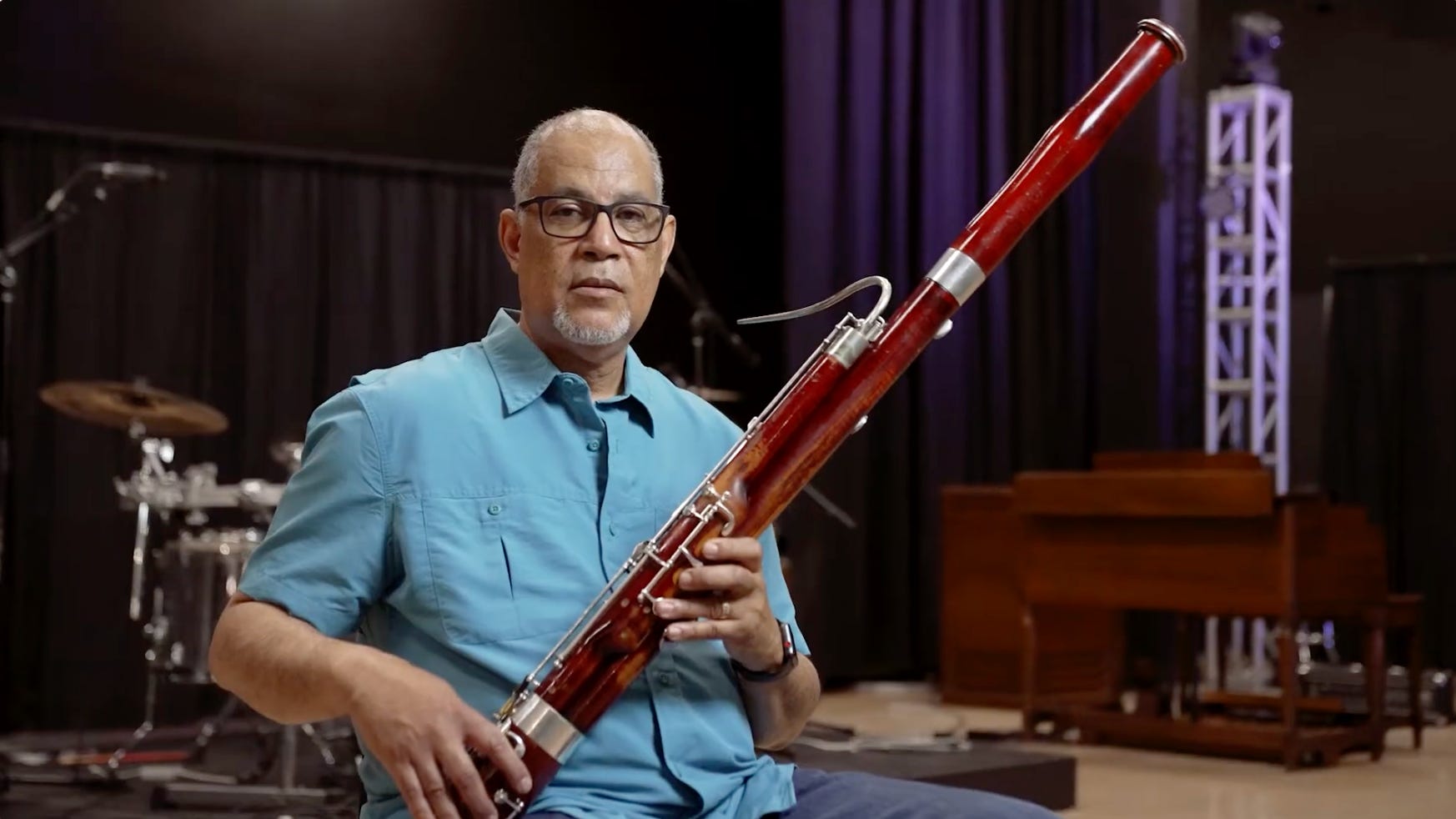
1. Why did you decide to go to grad school?
I knew I did not want to teach in public schools, but I did want the option to teach at the college level, which meant I needed an advanced degree. At the same time, Vietnam was happening, and I knew I did not want to go that route. I also knew I was not finished learning. I had come out of an undergraduate program where I was playing all day, every day, and that constant playing was a huge boost to my growth. Grad school, centered around music education and performance, felt like the best place to keep growing.
2. What did you study in grad school?
My degree was a Master of Arts, but it was really built around a dual focus: music education and performance. Unlike many education majors, I always had one foot in each world. I would write papers during the day and play at night, or the other way around, and that balance became my way forward. It kept me from getting stuck in one lane. Teaching fed my playing, and playing fed my teaching.
3. How many instruments and styles do you work in?
People tend to see me as someone who can play most anything style wise. That is partly upbringing. None of my teachers ever told me, “You cannot do that.” I play all the woodwinds: flutes, all the saxophones, clarinets, oboes, and bassoon. My day might start with flute and a little clarinet, then move into saxophone, and I rotate depending on what the orchestra or a gig requires. Over time I learned that working seriously on one instrument can improve your dexterity and control on another, so I am always looking for ways to make the instruments help each other.
4. What does a contractor do, and how did you become one?
A contractor is the person who hires the musicians for a job, figures out the budget, chooses the players, coordinates rehearsals, and makes sure the right people are in the right seats. A lot of musicians do not want that responsibility because it comes with stress and people management. I fell into it by accident. I was playing at the Peabody for a major event when part of the artist’s band arrived late without their music. The person who was supposed to handle things was overwhelmed, and someone asked, “Michael, can you do this?” I said, “I will try.” That led to church work, and eventually to contracting Broadway touring shows at the Orpheum and even hiring a 38 piece orchestra to play with The Who at FedEx Forum.
5. What is it really like playing in the pit for touring shows?
It is demanding work. You are usually doing eight shows a week, about three hours each, in a cramped pit with the same people. Reading is critical, but so is playing the correct style and being a good colleague. Books are often sent out a month or two in advance. You might get one four hour rehearsal, a sound check the day of, and then you are on. Not every show even needs a full local orchestra anymore. Many are self contained and travel with their own players, using keyboards to cover parts that used to go to live musicians. To get hired, you have to be competent, flexible, prepared, on time (which really means early), and easy to work with.
6. Looking back, what do you wish you had known as a high school student thinking about a music career?
I wish I had worked a little harder at certain points, practiced more instead of going out, and sacrificed a bit more in the short term. No one is perfect, but you feel those moments later when you hit a wall or make a mistake and think, “If I had just spent more time on this…” I also turned down some opportunities, like an invitation to study at Indiana, because of personal ties, like a girlfriend. In hindsight, staying in Memphis turned out to be a blessing. I built a diverse career, stayed close to family, and was there for aging parents. For a young player, I would say: work hard, stay versatile, be humble, and understand that your attitude and how you treat people matter as much as your chops. 𝄂
Getting the Gig exists to surface exactly this kind of detail—so high school musicians (and their parents) can see what real, workable music lives actually look like.