


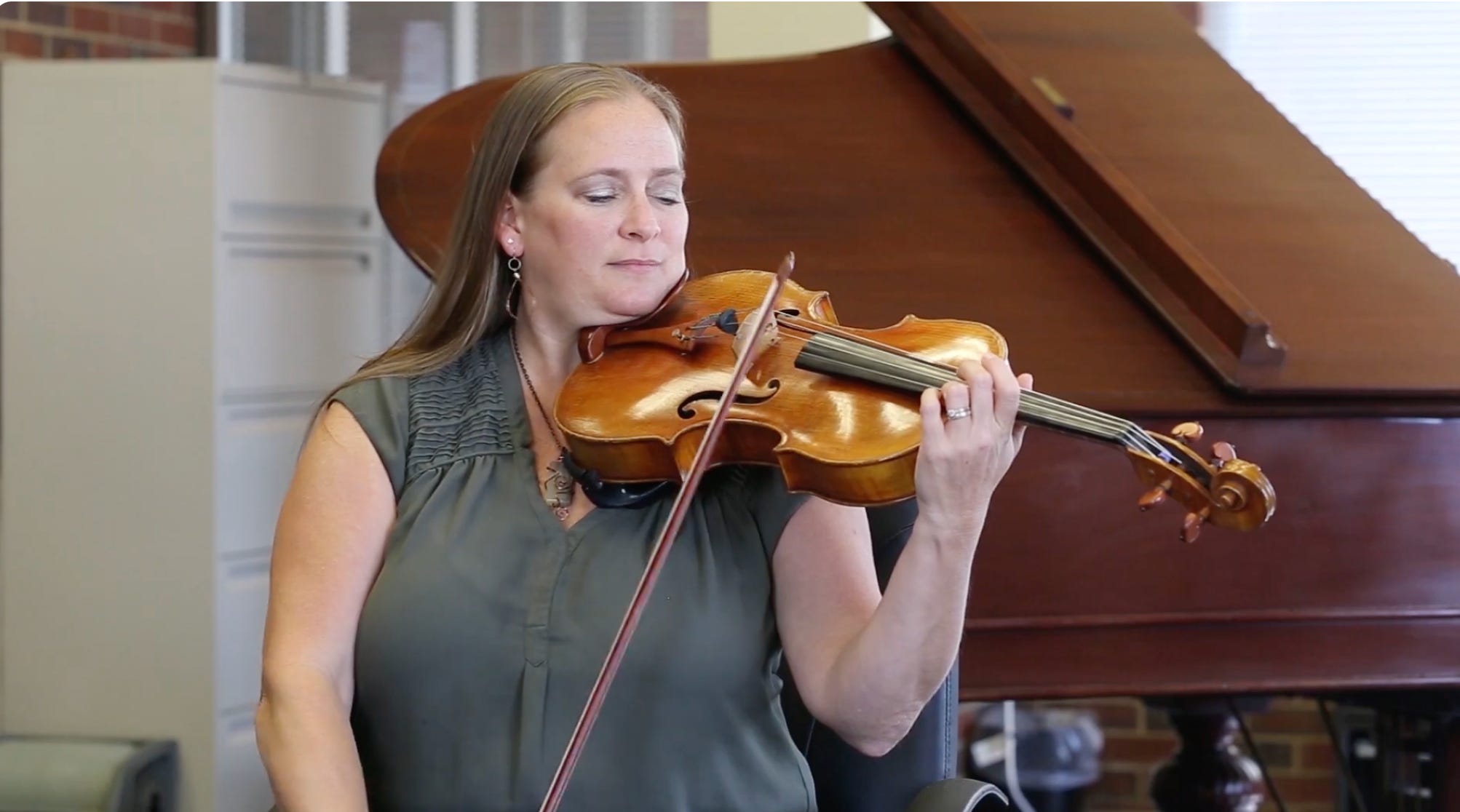
1. When did music first become part of your life?
I started playing violin when I was four years old. My mom found a Suzuki program in Columbus, Mississippi, and signed me up. It wasn’t really my choice at that age, but I remember seeing a symphony orchestra on television around that time and thinking, I want to do that someday.
Playing in an orchestra became my goal very early, even before I fully understood what that career might look like.
2. Most people in Memphis know you as a violist, but you said you actually began as a violinist.
That’s right. Most violists actually start on violin because the instrument is smaller and easier for young children to handle. I stayed on violin all the way through college. I didn’t switch to viola until graduate school.
Looking back, though, there were clues. I always preferred the deeper sound. I liked the inner harmonies and gravitated toward the second violin parts rather than the melody. My teachers noticed long before I did.
3. Was there ever a point when you almost walked away from music?
Absolutely.
When I was in middle school, we had just moved to Hendersonville, Tennessee, and I wanted to quit. I had been ripped away from my childhood home and now I’m in seventh grade, the most awkward time of a woman’s life ever, around people I didn’t know. I was embarrassed to tell people I played an instrument. I even tried convincing my mom to let me switch to cello because I wanted to sit down when I played. My mom didn’t even think about the fact that we are all gonna sit down when we play in an orchestra. And she wouldn’t let me quit.
At the time I wasn’t very happy about that, but today I’m incredibly grateful she insisted I stick with it.
4. What made you change your mind?
Governor’s School for the Arts.
I attended after my sophomore year of high school, and everything clicked. I remember performing Barber’s Adagio for Strings with students my own age. It was my first extended time away from home, and I associated that independence with making music every day.
That summer I fell in love with orchestral playing all over again. That’s when I knew I wanted to major in music.
5. Where did you continue your studies?
I attended the University of Alabama as a violin performance major on scholarship.
One of the biggest advantages of Alabama was the amount of professional experience we received. My professor encouraged me to audition for the Tuscaloosa Symphony during my first week of school. I won the audition, and before long I was also performing with regional orchestras throughout Alabama and Mississippi.
Those experiences became incredibly valuable later. When you’re applying for orchestra jobs, having real professional experience matters.
6. Your move to viola came later—and unexpectedly.
It really did.
Several teachers had suggested I switch over the years, but I resisted because I felt like switching meant I had somehow failed as a violinist.
My violin professor at Alabama, Patrick Rafferty told me, “You should pick viola as your secondary instrument. It really will come in handy one day.” And so I said, “All right, fine. I’ll play viola.” And the rest was history.
Everything changed after I attended the Aspen Music Festival. During my final lesson, my teacher stopped me as I was literally walking out the door and asked if I would consider auditioning for a graduate assistantship in viola at the University of Colorado.
I didn’t even own a viola.
A few weeks later, I had auditioned, been accepted, packed up my life, and moved to Boulder to begin graduate school as a violist.
7. How did graduate school prepare you for your career?
It gave me the time I needed to grow into the viola.
Since I had switched so late, the University of Colorado even granted me a third year of my assistantship so I could continue developing as a violist. At the same time, I was performing with the Colorado Symphony as a substitute and continuing to build professional experience.
Every opportunity helped prepare me for the next one.
8. Then came one of the biggest opportunities of all: New World Symphony.
Winning a position with New World Symphony was a major milestone.
It’s an incredibly competitive fellowship, and musicians from around the world audition for it. During those three years I practiced constantly and took audition after audition, preparing for the next orchestra position.
That’s where I learned that perseverance is just as important as talent.
9. How did Memphis enter the picture?
I was taking auditions all over the country when I saw the opening for Principal Viola with the Memphis Symphony Orchestra.
The position appealed to me because it brought me back to the South, and it offered the opportunity to lead a section. I took the audition, and fortunately everything came together that day.
This season marks my 22nd year with the orchestra.