

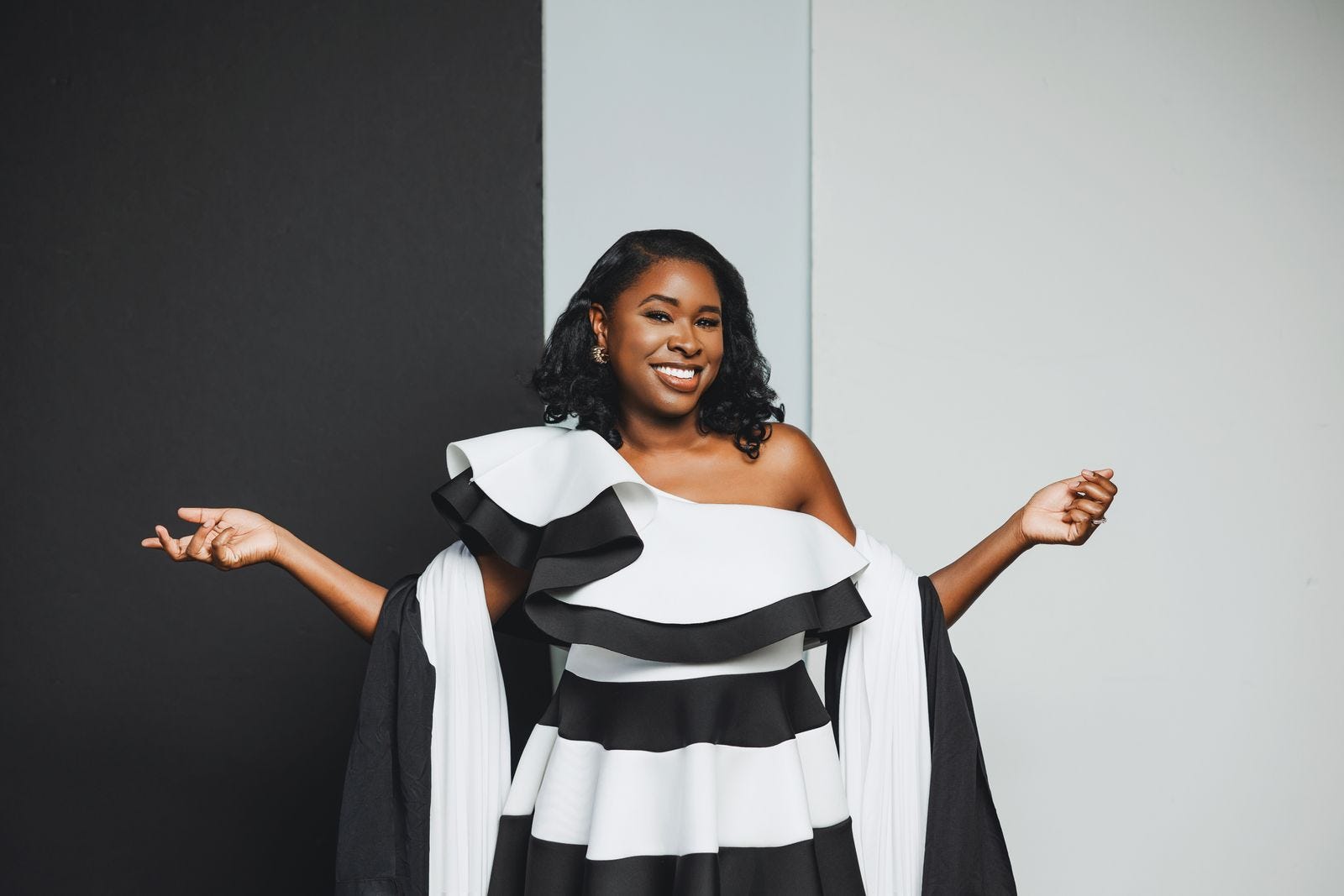
1. How did your career develop after your time away from playing?
I started playing with other people. I made an album with a singer near the end of my doctorate, and later began performing with my husband, who plays trombone, as well as with a cellist. Chamber music was less stressful than performing solo, and it broadened my horizons to repertoire I might not otherwise have played. It was a way to keep performing while finding a path that worked for me.
2. What kinds of projects are you working on now?
I’m at a nice place in my career where gigs come to me. I have a tour with Valerie Coleman and friends, performing a lot of Valerie’s music, and for several years I’ve played on shows with Solange Knowles’s company, Saint Heron. I also work on my own projects, including editing and publishing gospel music that I wasn’t taught growing up. I’m committed to getting that music written down and helping more people discover composers and repertoire they should know.
3. You’ve described yourself as classically trained but interested in many styles. How has your musical perspective changed?
Classical music was always my focus, and I spent about 20 years learning European composers. In the last seven to ten years, I’ve really started diving into other composers in classical music. After I graduated, I realized it was important to expand my horizons beyond what institutions had taught me. Once you have the technique, you can branch into the genres that interest you.
4. You’ve also arranged a collection of African American spirituals. What draws you to that work?
I have a book of 24 African American spirituals that I arranged, published by Hal Leonard at a beginning-to-intermediate level. I’m doing a lot of editing and promoting music I care about, and composers I think more people need to know. I wish gospel music had been more ingrained in my own playing as a child. I heard it so much and love it, but I didn’t see many Black women playing instruments in church. I hope to keep learning and helping preserve that music.
5. How did you decide which gigs to take early on?
Earlier in my career, I took everything. I didn’t care whether it paid or whether it was exactly what I wanted to do, because I needed experience. I did theater, weddings, and even worked as a Broadway pianist and musical director. Those experiences gave me repertoire and knowledge I can share with students. Now I’m more specialized. I think about the human experience: who I’m playing with, whether I connect with the artists, and whether the project will influence people and feel worth my time.
6. What role do competitions play for young musicians?
Competitions can be useful goal setters, especially for students who need help organizing their preparation. I won some competitions before I was 23, and now I enter my students in them. But I don’t think competitions are the only way. They can be beneficial without being the measure of a musician’s entire future.
7. What advice would you give your younger self about setbacks?
During my injury, I felt like I had lost my twenties. I was injured at 23 and didn’t come out of it until I was 29. I would tell my younger self to stick through adversity, because you never know how it might change your life for the good. I’m glad my path changed. If I had stayed focused only on the repertoire and competitions I thought I needed, I don’t think my career would have developed the way it has.
8. What else should young musicians keep in mind as they build their careers?
Learn everything you can: your instrument, the history, the vocabulary, and different kinds of music. But also get a hobby that has nothing to do with your instrument. I ask my students to do cultural enrichment—to go to a museum, visit a park, and get to know other people. Some are so busy being busy that they forget to have fun. Those experiences are part of what makes us interesting as people and as musicians. It’s important, especially for this generation, to be human.