

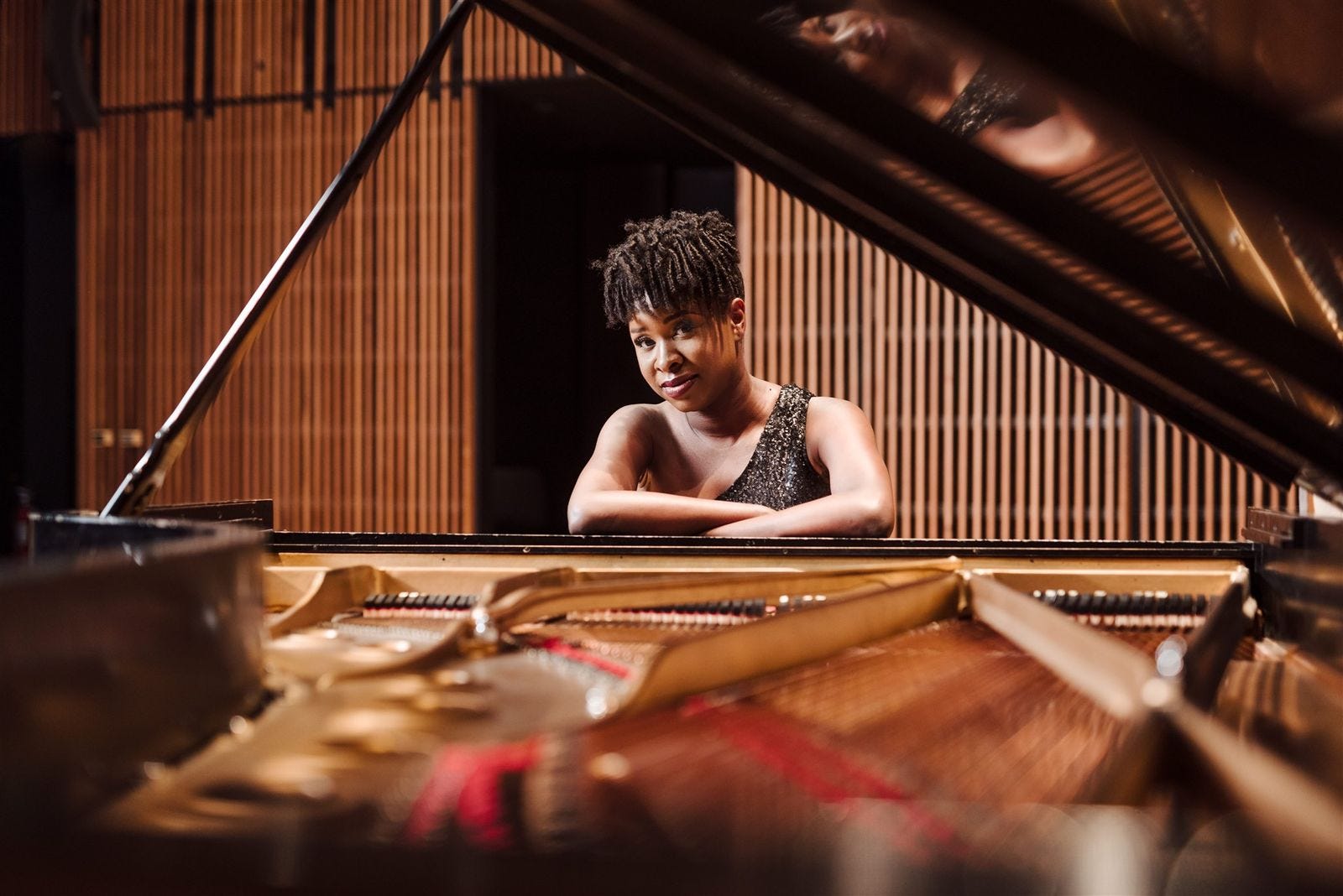
1. When did you first start playing music, and how did you choose piano?
I originally started piano at age six with a neighborhood teacher. I usually say I restarted at nine, because that’s when I began taking lessons more seriously. I started because my mom didn’t like my singing, so I didn’t really have a choice! I think piano is one of those instruments everybody should know how to play. I had a brief stint with clarinet in middle or high school, but piano really stuck.
2. What was your musical environment like growing up?
When I was 14, my parents moved to Florida, and I had the opportunity to attend a performing arts high school in Orlando. It was an electric atmosphere. The students were serious about their specialties, and a lot of people went on to become full-time performers. Being surrounded by people who were pursuing what they loved made music feel like a natural direction for me.
3. Did your parents encourage you to pursue music?
They were always supportive of our talents. They never told me I should become a doctor or a lawyer or choose something because it would make money. Looking back, I realize that was a pretty unique situation, because a career in music can be difficult. They even moved so I could attend the performing arts school, and I never got pushback about wanting to be an artist.
4. How important were private lessons to your development?
I think private lessons are important for people who are serious about music. You need someone who can tailor lessons to you as a person—to your strengths, talents and goals. In a group, a teacher has to teach to the middle of the class. If you’re moving faster, you can get bored; if you need more time, you can feel behind. A private teacher can nurture you as both an artist and a human being.
5. What experiences helped broaden your perspective as a young musician?
My teachers helped me find opportunities to grow beyond my immediate surroundings. I attended summer music festivals at Oberlin Conservatory and a program at Juilliard called the Juilliard Experience, which brought students of African descent and Hispanic students to New York to learn about the conservatory and the city. That experience really blew my mind. I thought, ‘I’m in it. I’m done. This is great.’
6. You went on to study at Southern Methodist University, the Cleveland Institute of Music and the University of Texas at Austin. What shaped you during that time?
I had fantastic teachers, but my peers were a huge influence. When you see someone your own age doing something at a high level, it encourages you to step up. Each school gave me a strong studio and teachers who pushed me, and I kept looking for a national perspective through festivals and other opportunities. It’s easy to feel like you’re the best in your town without realizing how much more there is to learn.
7. You’ve said you were focused on becoming a concert pianist. Did that path change?
I injured myself at 23 and took about five years away from playing. I honestly thought I might not be able to become a concert pianist, because you have to be able to practice. That experience pushed me toward education and made me value having a multifaceted career. When I came through that period, I started thinking more about music outside what I had studied in school. In a way, that difficult time opened up other possibilities for me.